
Exterior · Specialty
De-Ice Boot Refurbishing
Rejuvenate boot appearance with a functional high-gloss finish that supports effective ice shedding in flight.
Exterior Services
Overview
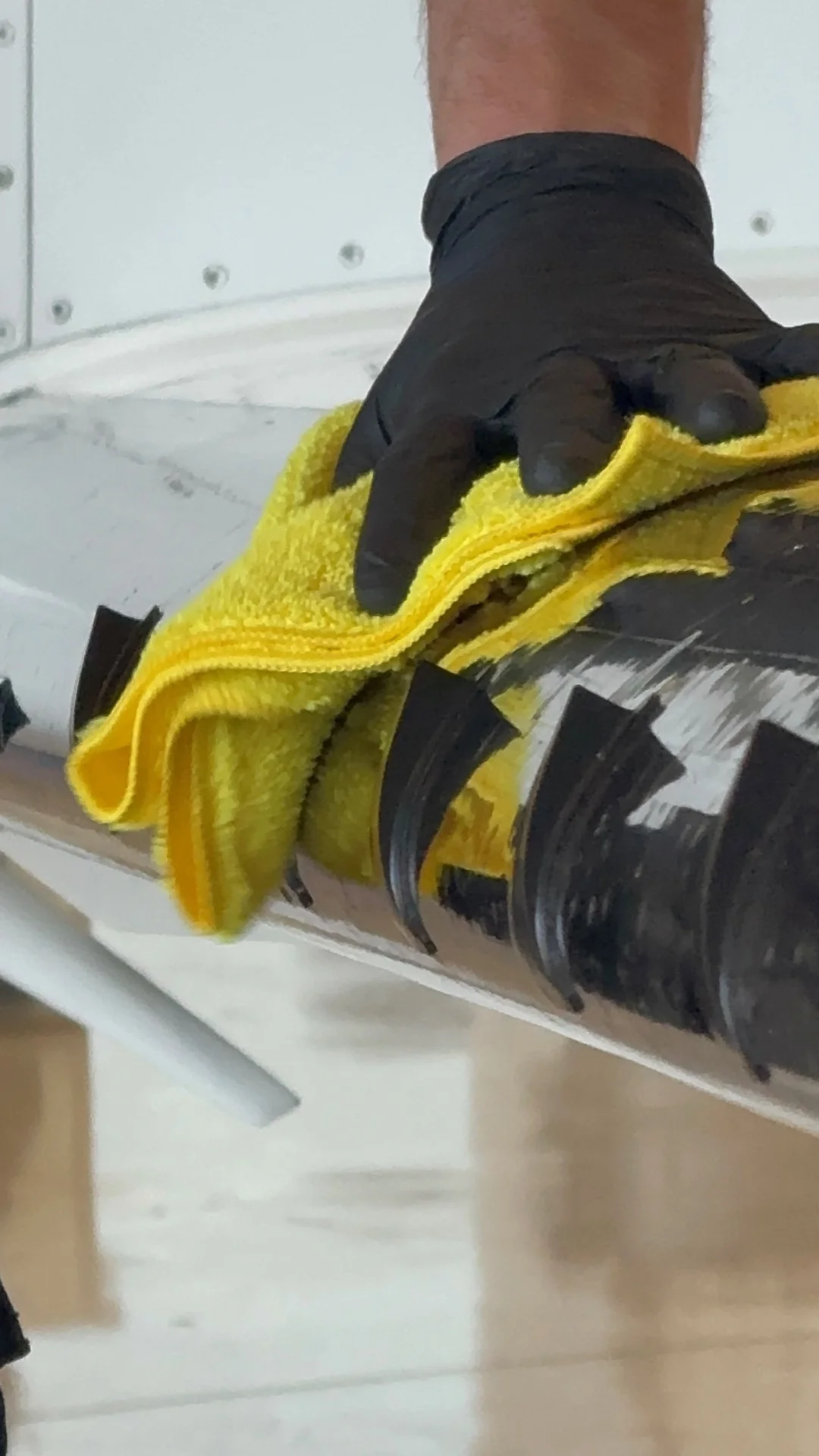
De-ice boots weather quickly from UV exposure, flexing, and operational wear, affecting both appearance and performance. Our refurbishing process restores a uniform, high-gloss finish while preserving the elasticity and ice-shedding properties your aircraft depends on in IFR conditions.
Key Benefits
- Restores uniform appearance across all boots
- Maintains functional ice-shedding performance
- Extends boot life before costly replacement
- Complements full exterior detail programs
- Completed on-ramp or in hangar per schedule
Our Process
- 1 Boot condition assessment and cleaning
- 2 Surface preparation per aviation standards
- 3 Application of approved boot treatment compounds
- 4 High-gloss finish curing and inspection
- 5 Operational readiness verification
Frequently Asked Questions
- Why do de-ice boots turn gray and chalky?
- Boot rubber oxidizes from UV exposure, ozone, and repeated inflation cycles. The chalky surface not only looks poor but can reduce the ice-shedding efficiency the boots were designed to deliver.
- Does refurbishing affect boot function?
- No. We use aviation-approved boot treatment compounds that restore a uniform high-gloss finish while preserving the rubber's elasticity and ice-shedding properties. The boots remain fully operational.
- How often should boots be treated?
- Most turboprop and piston operators treat boots two to four times per year, ideally alongside exterior details and before icing season, to slow oxidation and extend boot life before costly replacement.